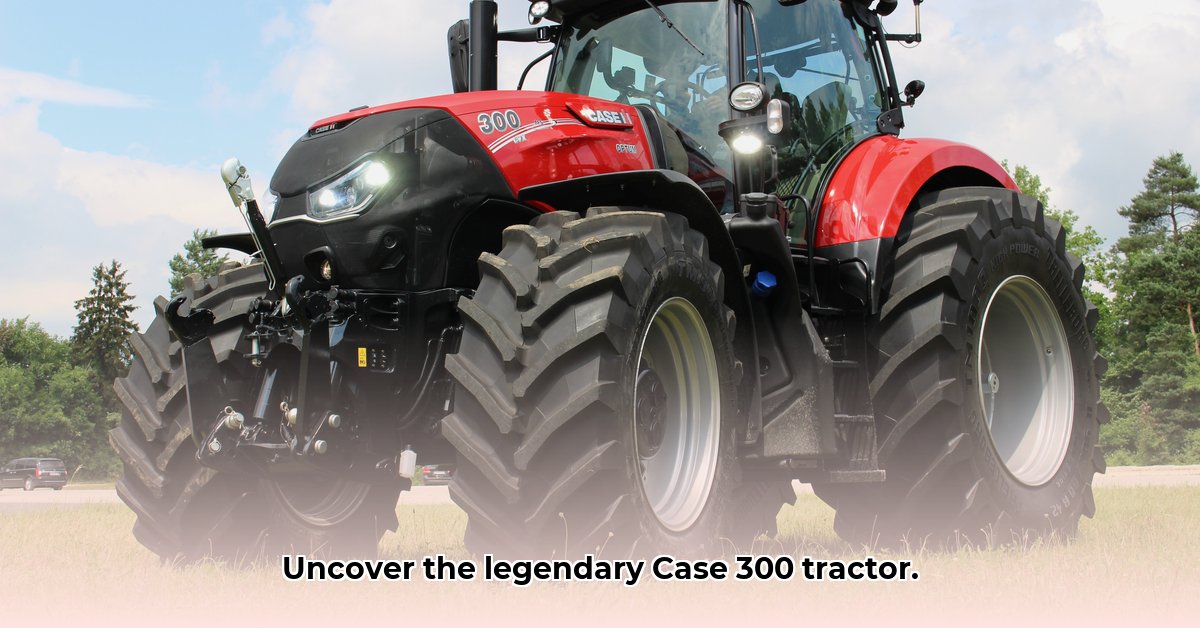
A Legacy Forged in Steel: The Story of the Case 300
The J.I. Case 300 series isn't just a tractor; it's a time capsule. Produced in limited numbers between 1956 and 1958, these machines represent a pinnacle of agricultural engineering and are now highly sought-after collector's items. This article delves into the fascinating history, technical specifications, and the rewarding – yet challenging – journey of restoring a Case 300. For more on vintage tractors, see this site.
Mechanical Marvels: Power and Precision
Under the hood of the Case 300 resides a Continental 2.6-liter four-cylinder diesel engine (a robust powerplant for its era). This engine, coupled with a 4-speed sliding gear transmission, surprisingly generates a 12-speed configuration, offering unparalleled versatility for its time. But the real innovation lies in the "Tripl-Range" live Power Take-Off (PTO) system (a system that allowed for seamless power transfer to various implements without speed adjustments). This ingenious system allowed farmers to effortlessly switch between tasks, significantly boosting efficiency. The result is a machine that, even by today's standards, offers a remarkably smooth and powerful work experience – a true testament to Case's engineering prowess.
Model Variations: Spotting the Differences
The Case 300 wasn't a one-size-fits-all solution. Several variations emerged, each catering to specific agricultural needs. The Case 300 itself served as a general-purpose workhorse. However, models like the 301 and 302, and others, incorporated modifications designed for specialized applications, such as row crops or industrial settings. These nuanced differences significantly impact a tractor's current value. Tracking down a rare variant can be a thrilling quest, significantly boosting the collector's potential investment.
Value and Collectibility: A Rare Breed
The Case 300's low production numbers (estimated to be around 249 units) immediately elevate its desirability amongst vintage tractor enthusiasts. However, condition is paramount in determining its market value. A meticulously preserved Case 300, complete with its original parts and service records, commands a substantial premium. Auction prices vary considerably, fluctuating based on factors such as originality, specific model variant, and overall completeness. While precise valuation remains challenging due to limited sales data, the inherent rarity ensures continued appreciation in the vintage tractor market.
Restoration and Maintenance: A Labor of Love
Restoring a Case 300 is a significant undertaking, demanding both mechanical skill and historical awareness. Parts scarcity presents a major hurdle. Original parts are rare gems; locating them often involves persistent research, networking within the vintage tractor community, and sometimes, custom fabrication. Common issues during restoration include engine wear and transmission problems. While restoration costs can occasionally exceed the tractor's market value, the deep satisfaction of bringing a piece of agricultural history back to life is a reward beyond monetary calculation.
Market Value: Key Factors to Consider
Determining an exact market value for a Case 300 requires more extensive research than is available for this guide. However, several critical elements consistently influence the final price:
- Condition: An exceptional condition significantly boosts value; a pristine tractor fetches a premium.
- Rarity of Model: Rare variants, like specialized models, command higher prices than standard models.
- Completeness: A complete tractor, with all its original components and accessories, is significantly more valuable.
- Documentation: Service records and original manuals increase the tractor's authenticity and desirability, enhancing value.
Further investigation using comprehensive auction records and expert appraisals is necessary for a more precise valuation range.
Conclusion: Preserving a Piece of History
Owning a Case 300 is more than just owning a tractor; it's about owning a piece of history. While restoration presents unique challenges, the rewards – both financial and sentimental – are immeasurable. These rare machines embody a bygone era of agricultural innovation and represent a significant investment for collectors and enthusiasts alike. The Case 300 holds a unique place within the vintage tractor market, a testament to its enduring legacy.
Appendix: Further Research
For further information on parts sourcing, restoration techniques, and Case 300 history, consider exploring online forums dedicated to vintage tractors and contacting experienced restoration specialists. The community of Case 300 enthusiasts is a valuable resource for both beginner and experienced restorers.